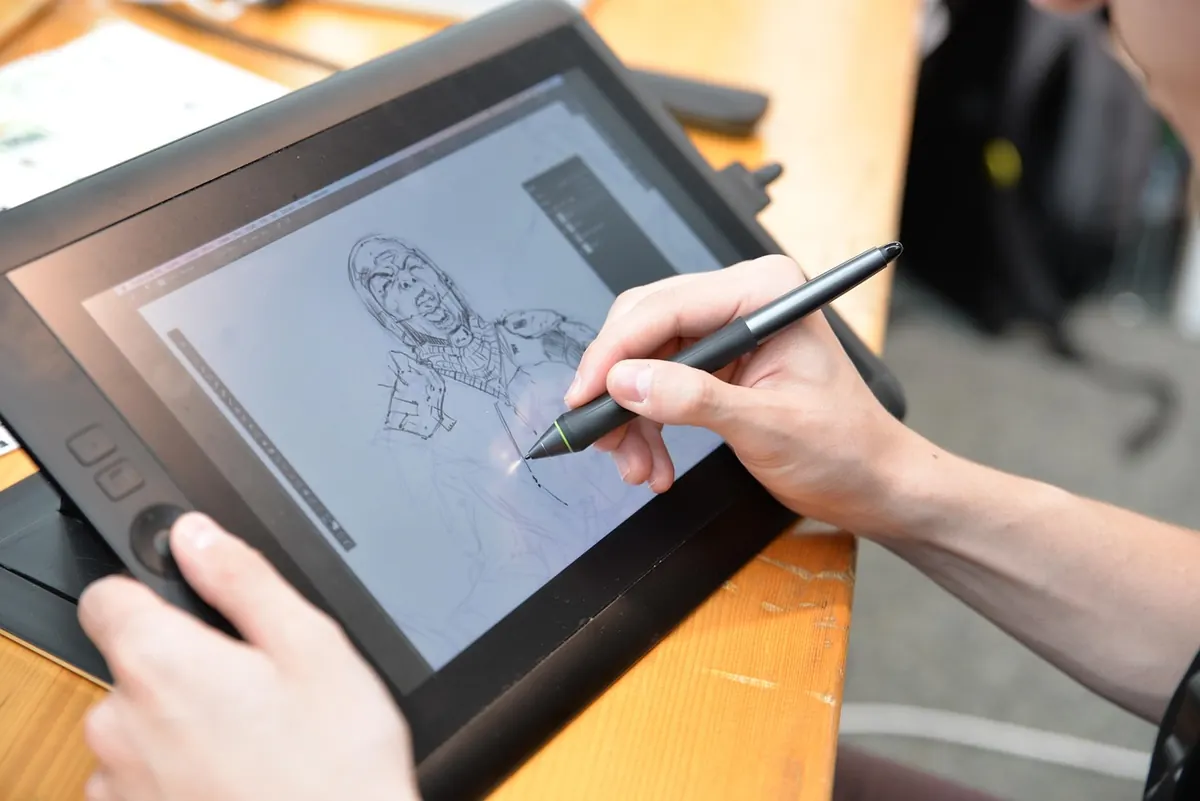
Vector vs Hand-Painted Coat of Arms: Comparing Custom Design Options
A coat of arms can end up in more places than most people expect. A signet ring. A letterpress card. A framed panel above a fireplace. An embroidered blazer pocket. The design may be the same in each case, but how it is made changes what you can do with it, how it ages, and how it feels in the hand.
Two routes sit at either end of the scale: precise vector artwork, and a painting made by hand. Neither is automatically the better choice. What matters is the arms themselves, where they will be used, and what you want to be holding at the end of it.
Sort the heraldry first, then the medium
Heraldry is written before it is drawn. A blazon such as Azure, a chevron Or between three crosses crosslet Argent tells any competent artist, working in any medium, exactly what to produce. Tinctures are named, charges are described, and the composition is fixed in words. That is the quiet advantage of heraldic work: the description travels, the artwork does not have to.
So settle the blazon before you commission anything. Decide on the shield, the helm and mantling, the motto if there is one, and where any marks of cadency belong. Once that is agreed in writing, you are free to move between media later — vector today, a painting next year — without starting the design again.
Get the blazon right and any artist can render it. Get it wrong and every version will be wrong in the same way.
One practical note: a formally granted coat of arms is a separate matter from artwork. In England, Wales and Northern Ireland, grants come through the College of Arms; in Scotland, through the Court of the Lord Lyon. If you intend to use arms in trade, take proper advice on your rights before you print anything.
Vector artwork: sharp edges, endless sizes
Vector files — SVG, EPS, PDF, AI — describe shapes as mathematical paths rather than pixels. That single fact explains most of their appeal. A crest drawn as vector can be engraved on an eight-millimetre signet ring and printed across a two-metre banner from the same file, with no blurring and no redrawing.
Where vector wins
- Consistency. Twenty items, one look. Cards, embroidery, an embossing die, a website header — all cut from the same cloth.
- Editing. A motto change, a new cadency mark, a business name swapped: minutes of work rather than a repaint.
- Supplier-friendly. Printers, embroiderers and engravers ask for vector because it removes guesswork from their end.
- Legibility at small sizes. Clean linework survives being shrunk onto a seal or a lapel pin.
Where vector can fall short
Lines can look uniform to the point of clinical. A lion rampant drawn as flat shapes has none of the modelling a painter would give the mane and haunches. That flatness suits seals, stamps and stationery; it can feel thin on a wall.
Beware, too, of auto-traced files. Software that converts a photograph or an old book scan into paths often leaves behind hundreds of stray nodes and ragged edges. Ask your designer to draw the artwork afresh rather than trace it, and ask for text converted to outlines so nothing reflows on someone else's machine.
Hand-painted: an original with weight
A hand-painted coat of arms is usually gouache, watercolour or egg tempera on vellum, board or canvas, often with gold leaf laid over a gesso ground. The painter makes hundreds of small decisions — the curl of a scroll, the tilt of a helm, how far the light falls across a field — and those decisions are what you are really commissioning.
What hand-painting gives you
- Depth. Layered colour and burnished metal leaf shift as you move past the frame.
- Interpretation. A good heraldic painter knows the conventions and brings judgement to them.
- An object. Something to hang, to hand down, to unwrap on a significant birthday. It exists without a screen.
The trade-offs
A painting is not a file. To reuse it, it has to be photographed or scanned at high resolution, and what comes back is a raster image: handsome at one or two sizes, increasingly soft as you enlarge it. Colour matching to a printer's inks is approximate at best, and gold leaf will never match a metallic ink. Corrections are laborious once the paint has dried or been varnished.
Then there is care. Keep the piece out of direct sunlight, frame it behind glass, and watch for damp. Detailed work also takes time — many hours across many sessions — so plan the commission well before the date you need it.
A fair comparison
Put the two side by side and the differences settle into a few practical lines:
- Line quality: vector is exact; hand-painted lines vary with brush pressure, which is often the charm.
- Scaling: vector scales losslessly; a painting must be re-photographed or repainted for each new use.
- Colour: vector gives flat, repeatable fills; painting gives subtle, layered tones that are hard to reproduce precisely.
- Working with suppliers: vector is the shared language of print, embroidery and engraving; a painting must be digitised first.
- Longevity: a well-kept painting can outlast several laptops, but digital files need backing up and migrating as formats change.
- Character: one is reproducible, the other is one of a kind.
The hybrid route, and when to take it
Most sensible commissions end up doing both. Have the blazon drawn as clean vector artwork first, then hand that file to a painter as a layout map — proportions, charge placement, lettering positions — and let them paint freely from it. The two versions sit comfortably together because they share a description, not a tracing.
The reverse works too: paint first, then have a designer redraw the artwork properly as vector, by hand rather than by auto-trace. Expect that redraw to take real time. It is skilled work, and it shows.
As a rough guide: signet rings, wax seals, stamps, engraving, stationery, livery, embroidery and anything digital all point to vector. Wall panels, illuminated certificates, bookplates, family records and milestone gifts point to hand-painting. If you need both, commission both.
Before you commission: a short checklist
- Settle the blazon in writing, with tinctures named correctly and every charge described.
- Ask for a pencil rough or a low-resolution proof before the final work begins, and agree the helm, mantling and motto placement at that stage.
- For vector work, confirm exactly which files you will receive — SVG, EPS or PDF plus a high-resolution PNG or JPEG for everyday use — and whether text will be outlined.
- For painted work, ask about materials, finished size, framing and varnishing, and request a high-resolution scan or photograph as part of the commission.
- Agree in writing what you may do with the artwork: printing, reproducing, using it commercially on goods.
- Fix your colour references. Give the artist a Pantone or RAL number if the arms will be printed, and accept that metal leaf and metallic inks will not match a screen.
If you are still undecided, start smaller than you think you need to. A written blazon and a good pencil sketch cost little and commit you to nothing; from there, either route stays open. And where granted arms or commercial use are involved, speak to the relevant heraldic authority or a solicitor before you commit to print.
Photo: tunechick83 / Pixabay